1. Issue Description
현재 LicenseCategory 는 licenseType 과 analyzeType 을 CombinedKey 로 사용합니다. 그리고 이 두 개의 키는 LicenseCategoryId 라는 IdClass 로 선언되어 있어요.
그래서 같은 licenseType 과 analyzeType 을 가지게 된다면, 중복키 에러를 표시해야만합니다.
하지만 에러가 표시되지 않고 그대로 진행되버렸어요!
1.1 Screenshots
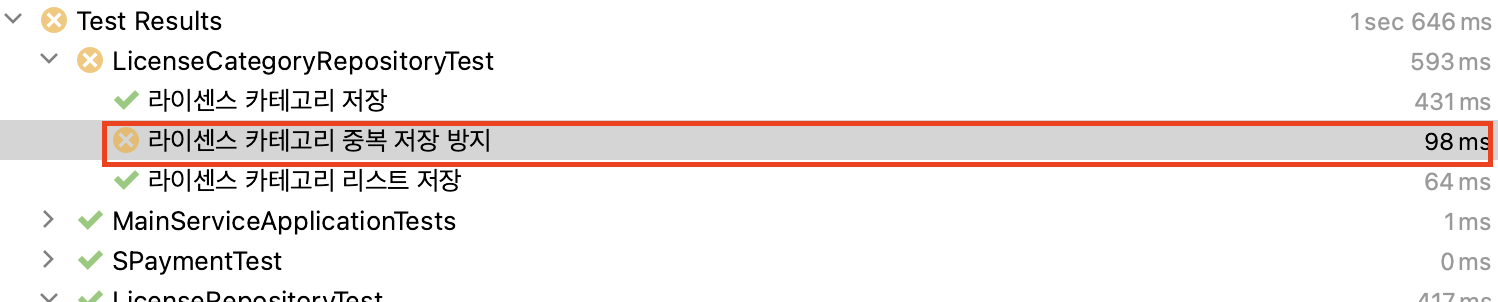
1.2 Error Code
- 테스트 코드
@Test
    @DisplayName("라이센스 카테고리 중복 저장 방지")
    void function2() {
        // given
        LocalDateTime now = LocalDateTime.now();
        LicenseCategoryId lcId = LicenseCategoryId.builder().licenseType("basic").analyzeType("악성코드").build();
        LicenseCategoryId lcIdDuplicate = LicenseCategoryId.builder().licenseType("basic").analyzeType("악성코드").build();
        LicenseCategory lc = LicenseCategory.builder().licenseType(lcId.getLicenseType()).analyzeType(lcId.getAnalyzeType()).createdAt(now).build();
        LicenseCategory lcDuplicate = LicenseCategory.builder().licenseType(lcIdDuplicate.getLicenseType()).analyzeType(lcIdDuplicate.getAnalyzeType()).createdAt(now).build();

        // when
        licenseCategoryRepository.save(lc);
        licenseCategoryRepository.save(lcDuplicate);
        // then
        assertThatThrownBy(() -> {
            licenseCategoryRepository.save(lcDuplicate);
        }).isInstanceOf(DuplicateKeyException.class);
    }
- 테스트 결과 오류
Expecting code to raise a throwable.
java.lang.AssertionError:
Expecting code to raise a throwable.
	at foxee.product.mainservice.domain.repository.LicenseCategoryRepositoryTest.function2(LicenseCategoryRepositoryTest.java:63)
	at java.base/jdk.internal.reflect.NativeMethodAccessorImpl.invoke0(Native Method)
	at java.base/jdk.internal.reflect.NativeMethodAccessorImpl.invoke(NativeMethodAccessorImpl.java:77)
	at java.base/jdk.internal.reflect.DelegatingMethodAccessorImpl.invoke(DelegatingMethodAccessorImpl.java:43)
	at java.base/java.lang.reflect.Method.invoke(Method.java:568)
	at org.junit.platform.commons.util.ReflectionUtils.invokeMethod(ReflectionUtils.java:727)
	at org.junit.jupiter.engine.execution.MethodInvocation.proceed(MethodInvocation.java:60)
	...
2. Problem
제가 예상했던 플로우는 JPA 에 첫 save() 호출 시 insert 되며, 두 번째 같은 ID 로 다른 객체를 삽입 시 마찬가지로 insert 되는 플로우에요.
하지만 JPA save() 중복 호출 시 기존 엔티티를 업데이트하게 됩니다.
save() 시 db에 같은 id 가 있으면 그대로 엔티티를 들고오고, 없다면 insert 해주고 있었어요.
왜 그럴까요? JPA 의 save() 메소드 동작과정을 보면 알 수 있어요!
3. JPA 에서 save() 동작 순서
3.1 save() 동작 코드 확인
save()는merge()와persist()둘 중 하나로 동작하게 됩니다.
JPA save() 내부 코드
        @Transactional
	@Override
	public <S extends T> S save(S entity) {

		Assert.notNull(entity, "Entity must not be null");

		if (entityInformation.isNew(entity)) {
			em.persist(entity);
			return entity;
		} else {
			return em.merge(entity);
		}
	}
- 위의 코드를 보면 아시겠지만, isNew() 의 반환조건에 따라서,
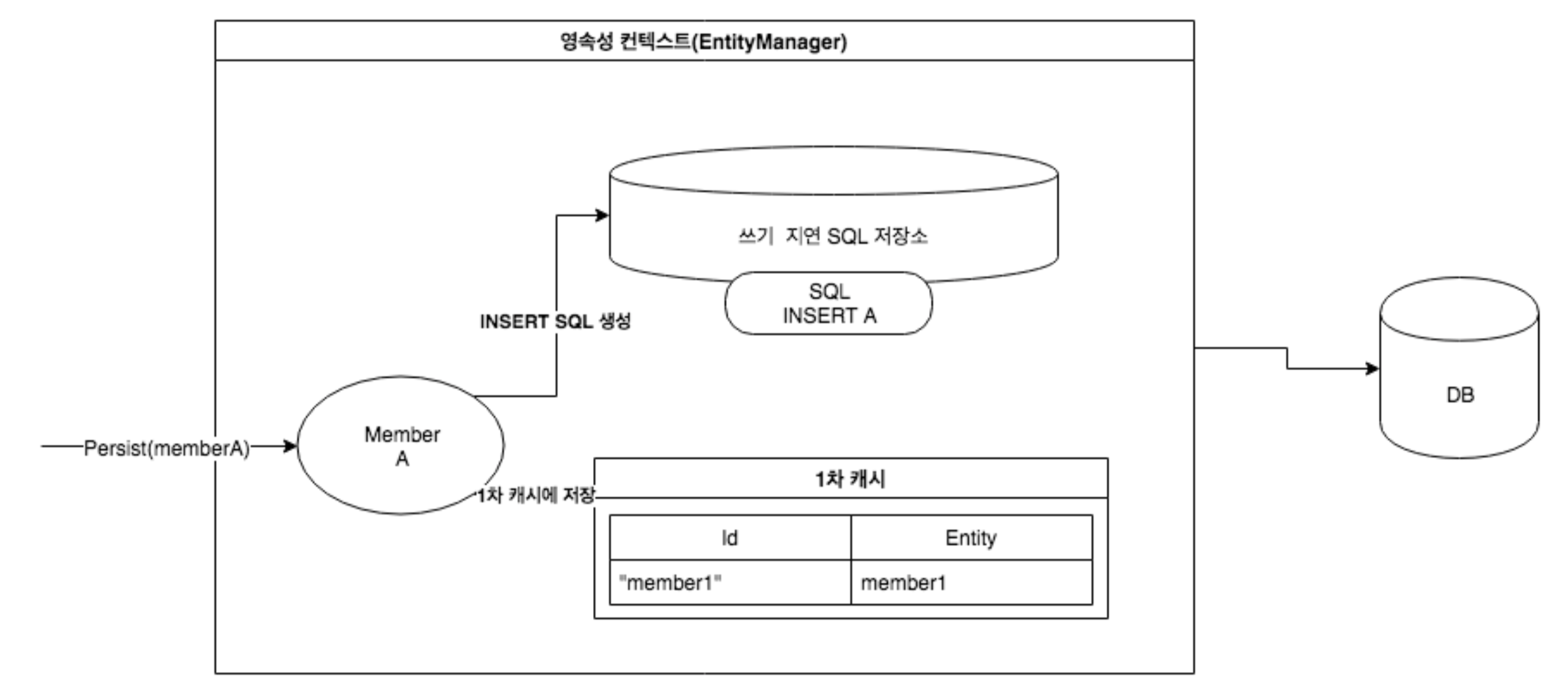
persist()와merge()로 분기가 나뉘는것을 볼 수 있습니다.persist : 즉시 DB 에 insert 쿼리를 전송합니다.
merge : detached 되어있는 엔티티를 manage 테이블(1차 캐시)로 가져오는데, 만약 detached 에 없을 경우에는 DB에 select 쿼리가 추가적으로 나가게 됩니다.
- 그렇다면 isNew() 는 무엇일까요?
isNew() 는 해당 Entity가 새롭게 만들어진 Entity인지, 혹은 기존에 사용되던 Entity 인지를 구분합니다.
- 그렇다면 어떤식으로 Entity가 새로운 Entity인지 아닌지를 구분할까요? 코드로 확인해보겠습니다.
       public boolean isNew(T entity) {

		ID id = getId(entity);
		Class<ID> idType = getIdType();

		if (!idType.isPrimitive()) {
			return id == null;
		}

		if (id instanceof Number) {
			return ((Number) id).longValue() == 0L;
		}

		throw new IllegalArgumentException(String.format("Unsupported primitive id type %s", idType));
	}
Primitive vs Wrapper 참고
primitive 자료형이란? : int, float, long, double, boolean 과 같은 원시적 자료형
wrapper 자료형이란? : Integer, Float, Long, Double, Boolean, UUID, 사용자 정의 클래스
getId는 엔티티를 정의할 때 사용했던@Id필드를 가져옵니다.현재 우리 프로젝트는 LicenseCategoryId 를 PK 로 사용하기 위해
@id어노테이션을 붙였습니다. 그렇다면idType은 LicenseCategoryId 가 되겠죠?- isPrimitive 는 int, float, long, double 와 같은 하나의 primitive 자료형인지 판단하는 내장함수입니다.
현재 우리는 LicenseCategoryId 를 PK 로 사용하고 있기때문에 primitive 자료형이 아닌 wrapper 자료형입니다. 그렇다면 id==null 인지 확인하게 되겠죠? 이 때, 이미 id 값을 정해서 삽입했기때문에 false 를 반환하게 됩니다.
자! 그럼 다시 올라가서 isNew가 false 라면 어떤 과정을 가지게 될까요?
- JPA save() 내부 코드-다시
public <S extends T> S save(S entity) { if (entityInformation.isNew(entity)) { ... } else { return em.merge(entity); } } - 네. 바로 merge 를 수행하게 됩니다. 즉, detached 되어있는 엔티티를 가져오게 되겠죠!
즉, save 호출시 새로운 엔티티임에도 불구하고 UUID 자료형으로 PK 를 설정했기에 항상 persist 가 아닌 merge를 호출하게 됩니다
- 여기서 의문이 생기죠. detached 에는 어떤애들이 존재할까?라는 의문말입니다.
An entity becomes detached (unmanaged) on following actions:
- after transaction commit/rollback
- by calling EntityManager.detach(entity)
- by clearing the persistence context with EntityManager.clear()
- by closing an entity manager with EntityManager.close()
- serializing or sending an entity remotely (pass by value).
reference : https://www.logicbig.com/tutorials/java-ee-tutorial/jpa/detaching.html
위의 자료에서 눈여겨 볼 것은 after transaction commit/rollback 입니다. detach 영역에는 Transaction 내 쿼리가 끝나면 사용된 엔티티들을 detached 에 보관한다는 말이죠! 그리고 이 detached 는 준영속상태 라고 합니다.
- 종합하기 이전에 JPA manage 상태에 대해서 잠깐 설명해볼까해요.
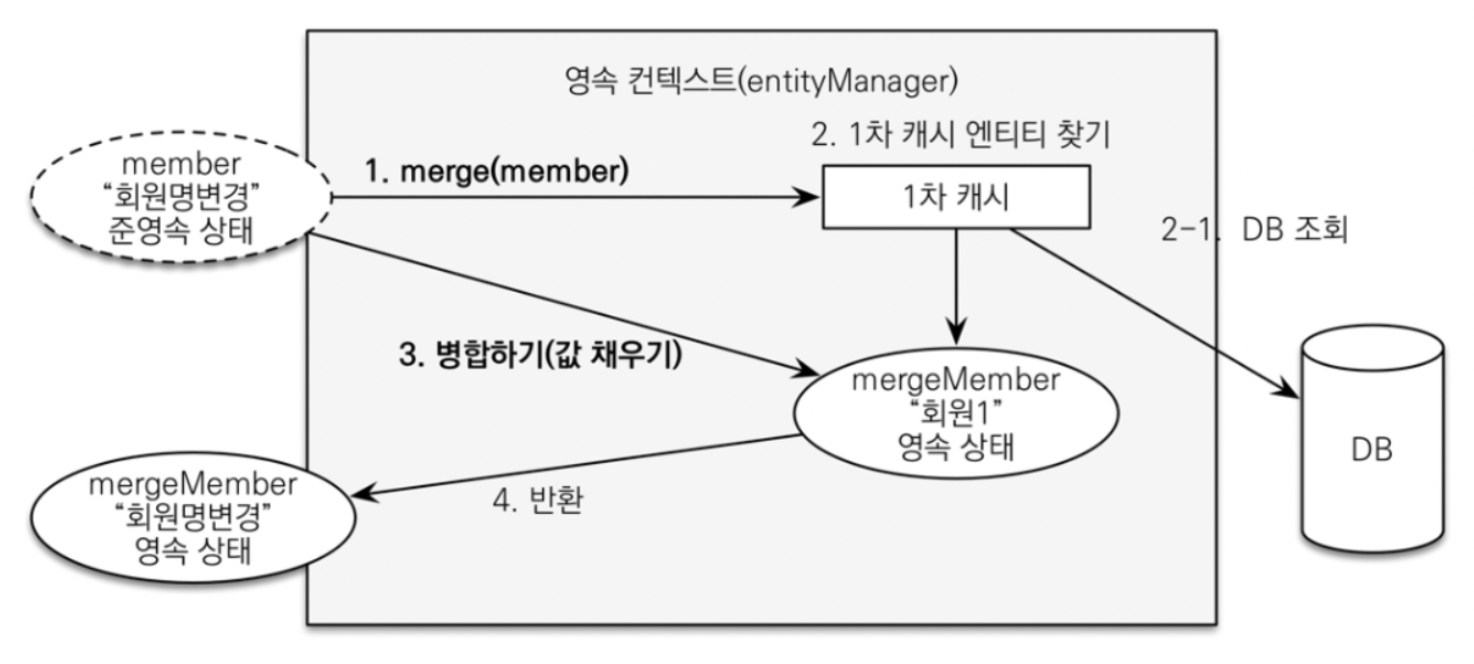
이전 앞서서 merge 는 detached 상태에서 manage 상태로 변경하는 역할을 수행한다고 말씀드렸습니다. 조금 더 자세히 말하면, id 값을 가지고 영속 컨텍스트의 1차 캐시 내 id 값이 일치하는 엔티티가 존재한다면 이를 그대로 업데이트합니다. 반면 1차 캐시 내 없다면, DB에 select 쿼리하고 결과를 1차 캐시에 집어넣습니다.
이렇게 id 값을 가지고 영속 컨텍스트 내 1차 캐시에 엔티티를 넣어주는 과정이 바로 영속화 과정이며, 1차 캐시에 삽입된 상태를 manage 상태라고 부릅니다.
3.2 트랜젝션에 따른 실제 쿼리 결과 테스트
동일 트랜젝션 내 동일 Id 를 가지는 엔티티 저장
- 코드
       transactionTemplate.execute((status)->{
            System.out.println("첫 번째 LC 저장 시작");
            licenseCategoryRepository.save(lc);
            System.out.println("첫 번째 LC 저장 완료");
            System.out.println("두 번째 LC 저장 시작");
            licenseCategoryRepository.save(lcDuplicate);
            System.out.println("두 번째 LC 저장 완료");
            return null;
        });
- 결과
첫 번째 LC 저장 시작

Hibernate: select l1_0.analyze_type,l1_0.license_type,l1_0.created_at from license_category l1_0 where (l1_0.analyze_type,l1_0.license_type) in ((?,?))
//  이 엔티티는 1차 캐시에 삽입됩니다

첫 번째 LC 저장 완료

두 번째 LC 저장 시작
// 그리고 detached 영역과 1차 캐시 영역을 확인 하고, 1차 캐시에 동일 ID가 존재하는 것을 확인하였으니 스킵합니다

두 번째 LC 저장 완료
Hibernate: insert into license_category (created_at,analyze_type,license_type) values (?,?,?)
다른 트랜젝션 내 동일 Id 를 가지는 엔티티 저장
- 코드
        transactionTemplate.execute((status)->{
            System.out.println("첫 번째 LC 저장 시작");
            licenseCategoryRepository.save(lc);
            System.out.println("첫 번째 LC 저장 완료");
            return null;
        });

        transactionTemplate.execute((status)->{
            System.out.println("두 번째 LC 저장 시작");
            licenseCategoryRepository.save(lcDuplicate);
            System.out.println("두 번째 LC 저장 완료");
            return null;
        });
- 결과
첫 번째 LC 저장 시작

Hibernate: select l1_0.analyze_type,l1_0.license_type,l1_0.created_at from license_category l1_0 where (l1_0.analyze_type,l1_0.license_type) in ((?,?))
//  이 엔티티는 1차 캐시에 삽입됩니다

첫 번째 LC 저장 완료

Hibernate: insert into license_category (created_at,analyze_type,license_type) values (?,?,?)
//  트랜젝션이 끝나고 flush와 commit 이 실행됩니다. 그리고 이 엔티티는 1차 캐시에서 제거됩니다

두 번째 LC 저장 시작

Hibernate: select l1_0.analyze_type,l1_0.license_type,l1_0.created_at from license_category l1_0 where (l1_0.analyze_type,l1_0.license_type) in ((?,?))
// 준영속에 존재하는 애가 1차 캐시에 있는지 먼저 확인하고 없으면 다시 select 쿼리를 전송합니다

두 번째 LC 저장 완료
이 select 쿼리의 뜻은 다음과 같습니다. db 에 저장된 row 를 가져와서 변경점이 있는지 없는지 확인하고 없다면 no 쿼리, 있다면 update 쿼리를 날릴것이다!
아래는 동일 ID 의 다른 createdAt값을 넣었을 때 쿼리되는 구문들을 확인할 수 있어요.
    @Test
    @DisplayName("라이센스 카테고리 중복 저장 방지 - JPA Seperated Transaction")
    void function2() {
        // given
        LocalDateTime now = LocalDateTime.now();
        LocalDateTime now2 = LocalDateTime.now().plusDays(5);
        LicenseCategoryId lcId = LicenseCategoryId.builder().licenseType("basic0").analyzeType("악성코드").build();
        LicenseCategoryId lcIdDuplicate = LicenseCategoryId.builder().licenseType("basic0").analyzeType("악성코드").build();
        LicenseCategory lc = LicenseCategory.builder().licenseType(lcId.getLicenseType()).analyzeType(lcId.getAnalyzeType()).createdAt(now).build();
        LicenseCategory lcDuplicate = LicenseCategory.builder().licenseType(lcIdDuplicate.getLicenseType()).analyzeType(lcIdDuplicate.getAnalyzeType()).createdAt(now2).build();

        // when
        transactionTemplate.execute((status)->{
            System.out.println("첫 번째 LC 저장 시작");
            licenseCategoryRepository.save(lc);
            System.out.println("첫 번째 LC 저장 완료");
            return null;
        });

        transactionTemplate.execute((status)->{
            System.out.println("두 번째 LC 저장 시작");
            licenseCategoryRepository.save(lcDuplicate);
            System.out.println("두 번째 LC 저장 완료");
            return null;
        });
    }
Hibernate: select l1_0.analyze_type,l1_0.license_type,l1_0.created_at from license_category l1_0
첫 번째 LC 저장 시작
Hibernate: select l1_0.analyze_type,l1_0.license_type,l1_0.created_at from license_category l1_0 where (l1_0.analyze_type,l1_0.license_type) in ((?,?))
첫 번째 LC 저장 완료
Hibernate: insert into license_category (created_at,analyze_type,license_type) values (?,?,?)
두 번째 LC 저장 시작
Hibernate: select l1_0.analyze_type,l1_0.license_type,l1_0.created_at from license_category l1_0 where (l1_0.analyze_type,l1_0.license_type) in ((?,?))
두 번째 LC 저장 완료
Hibernate: update license_category set created_at=? where analyze_type=? and license_type=?
4. 위의 결과를 다시 종합해보겠습니다
- 첫 번째 save()는 엔티티의
@id가 UUID 로 wrapper 자료형이고 id값을 같이 입력해주었기때문에 존재하기 때문에em.merge(entity)가 실행됩니다. - 하지만 detached 에 존재하지 않고, 1차 캐시또한 존재하지 않기 때문에 db 에
SELECT쿼리를 전송하여 결과를 가져옵니다.em.persist() 의 경우 1차 캐시에 존재하는 entity로 인지하고, 일반적으로 바로 INSERT 쿼리가 나가게 됩니다.
- 동일 ID 를 가지는 엔티티가 db에 존재한다면, UPDATE 문을 배치하고 최신엔티티를 1차 캐시에 삽입 및 합니다.
동일 ID 가 db에 없다면 INSERT 문을 배치합니다
- 트랜젝션이 끝난 뒤 배치된 SQL 문을 flush, commit, detach 합니다.
- 두 번째 save() 또한 마찬가지로 em.merge() 가 수행됩니다.
- 그리고 detached 영역에 존재하는 동일 ID 엔티티를 가져옵니다.
- 그리고 1차 캐시에 존재하지 않기 때문에 다시 SELECT 쿼리를 전송합니다.
- 이 ID 는 db에 존재하는 ID 이기 때문에, UPDATE 쿼리를 전송합니다.
5. 결론은?
- save() 는
isNew()를 통해서 새로운 객체인 경우 persist(), 아니면 merge()로 작동합니다. - isNew() 는 primitive + Number type 이면 0, IdClass와 같이 un-primitive 인 경우에는 null 인지를 확인함으로써 새로운 객체인지를 확인합니다.
- LicenseCategory는 un-primitive 인 IdClass 를 사용하고 값이 존재합니다.
- 그러므로 기존 객체를 가져와서 이를 변경하게 됩니다.
그렇다면 결론은 Persistable 인터페이스를 구현하여 isNew() 판단 조건을 변경하면 됩니다!
- isNew()를 통해 Entity가 새롭게 만들어진 entity로 인지, 혹은 기존에 사용되던 Entity 인지를 구분합니다. persist() 의 경우 기존에 존재하던 entity로 인지하고, 일반적으로 바로 insert 쿼리가 나가게 됩니다. 하지만 merge() 의 경우, 밀어 넣으려는 값의 id가 테이블에 있는지를 있는지를 확인해보기 위해서 select 쿼리가 추가적으로 1회 나갈 가능성이 있습니다. (1차 캐시에 없는 경우) 이 때문에 merge 사용시 saveAll() 과 같이 N개의 엔티티를 save 하게 되는경우, 불필요한 쿼리(select) N번이 추가적으로 발생하게 되어 성능에 이슈가 될 수 있습니다. 또한 merge는 pk가 같은 기존에 entity를 대체해버리기 때문에, entity내의 필드값들이 의도치 않게 사라지거나 변경되는 사이드 이펙트가 발생할 수 있습니다.
reference : ID UUID 저장시 고려
1. Issue Description
Currently, LicenseCategory uses licenseType and analyzeType as a combined key. These two keys are declared as an IdClass called LicenseCategoryId.
So if the same licenseType and analyzeType are used, a duplicate key error should be shown.
But the error was not shown, and the logic proceeded as-is.
1.1 Screenshots
1.2 Error Code
- Test code
@Test
    @DisplayName("Prevent duplicate license category save")
    void function2() {
        // given
        LocalDateTime now = LocalDateTime.now();
        LicenseCategoryId lcId = LicenseCategoryId.builder().licenseType("basic").analyzeType("악성코드").build();
        LicenseCategoryId lcIdDuplicate = LicenseCategoryId.builder().licenseType("basic").analyzeType("악성코드").build();
        LicenseCategory lc = LicenseCategory.builder().licenseType(lcId.getLicenseType()).analyzeType(lcId.getAnalyzeType()).createdAt(now).build();
        LicenseCategory lcDuplicate = LicenseCategory.builder().licenseType(lcIdDuplicate.getLicenseType()).analyzeType(lcIdDuplicate.getAnalyzeType()).createdAt(now).build();

        // when
        licenseCategoryRepository.save(lc);
        licenseCategoryRepository.save(lcDuplicate);
        // then
        assertThatThrownBy(() -> {
            licenseCategoryRepository.save(lcDuplicate);
        }).isInstanceOf(DuplicateKeyException.class);
    }
- Test result error
Expecting code to raise a throwable.
java.lang.AssertionError:
Expecting code to raise a throwable.
    at foxee.product.mainservice.domain.repository.LicenseCategoryRepositoryTest.function2(LicenseCategoryRepositoryTest.java:63)
    ...
2. Problem
The flow I expected was that the first save() call would insert in JPA, and inserting another object with the same ID would also try to insert and therefore fail.
But when JPA save() is called repeatedly, it updates the existing entity.
On
save(), if the same id exists in the DB, it loads that entity as-is. If it does not exist, it inserts it.
Why does this happen? It becomes clear when looking at how JPA’s save() method works.
3. JPA save() execution order
3.1 Checking save() code
save()works as eithermerge()orpersist().
Internal JPA save() code:
        @Transactional
    @Override
    public <S extends T> S save(S entity) {

        Assert.notNull(entity, "Entity must not be null");

        if (entityInformation.isNew(entity)) {
            em.persist(entity);
            return entity;
        } else {
            return em.merge(entity);
        }
    }
- As you can see, depending on the return condition of isNew(), it branches to
persist()ormerge().persist: immediately sends an insert query to the DB.merge: brings a detached entity into the managed table, the first-level cache. If it is not in detached state, an additional select query is sent to the DB. - Then what is isNew()?
isNew() distinguishes whether the Entity is newly created or an existing Entity.
- How does it distinguish whether an Entity is new? Let us check the code.
       public boolean isNew(T entity) {

    ID id = getId(entity);
    Class<ID> idType = getIdType();

    if (!idType.isPrimitive()) {
        return id == null;
    }

    if (id instanceof Number) {
        return ((Number) id).longValue() == 0L;
    }

    throw new IllegalArgumentException(String.format("Unsupported primitive id type %s", idType));
}
Primitive vs Wrapper reference
Primitive types: raw types such as int, float, long, double, boolean.
Wrapper types: Integer, Float, Long, Double, Boolean, UUID, custom classes.
getIdgets the@Idfield used when defining the entity.In our project,
@Idwas attached to useLicenseCategoryIdas the PK. ThenidTypebecomesLicenseCategoryId.isPrimitiveis a built-in function that determines whether the type is a single primitive type such as int, float, long, or double.Since we use
LicenseCategoryIdas the PK, it is a wrapper type, not a primitive type. So it checks whetherid == null. At this point, because the id value was already set before insert, it returns false.- Then what happens if
isNewis false?
JPA save() internal code again:
    public <S extends T> S save(S entity) {
        if (entityInformation.isNew(entity)) {
            ...
        } else {
            return em.merge(entity);
        }
    }
- It performs merge. That means it brings in the detached entity.
In other words, even though it is a new entity, because the PK is set with a UUID-like wrapper type,
savealways calls merge instead of persist. - Here, a question appears: what exists in detached state?
An entity becomes detached (unmanaged) on following actions:
- after transaction commit/rollback
- by calling EntityManager.detach(entity)
- by clearing the persistence context with EntityManager.clear()
- by closing an entity manager with EntityManager.close()
- serializing or sending an entity remotely (pass by value).
reference: https://www.logicbig.com/tutorials/java-ee-tutorial/jpa/detaching.html
What matters in the reference above is after transaction commit/rollback. It means that after a query inside a transaction ends, the used entities are kept in detached state. This detached state is called semi-persistent state.
- Before summarizing, let me briefly explain JPA managed state.
As mentioned earlier,
mergechanges an entity from detached state to managed state. More specifically, if an entity with the same id exists in the first-level cache of the persistence context, it updates it as-is. If it does not exist in the first-level cache, it sends a select query to the DB and puts the result into the first-level cache.This process of putting an entity into the first-level cache of the persistence context by id is the persistence process, and the state inserted into the first-level cache is called managed state.
3.2 Testing actual query results by transaction
Saving entities with the same Id in the same transaction
- Code
       transactionTemplate.execute((status)->{
            System.out.println("first LC save start");
            licenseCategoryRepository.save(lc);
            System.out.println("first LC save complete");
            System.out.println("second LC save start");
            licenseCategoryRepository.save(lcDuplicate);
            System.out.println("second LC save complete");
            return null;
        });
- Result
first LC save start

Hibernate: select l1_0.analyze_type,l1_0.license_type,l1_0.created_at from license_category l1_0 where (l1_0.analyze_type,l1_0.license_type) in ((?,?))
// This entity is inserted into the first-level cache.

first LC save complete

second LC save start
// It checks the detached area and first-level cache, finds the same ID in the first-level cache, and skips.

second LC save complete
Hibernate: insert into license_category (created_at,analyze_type,license_type) values (?,?,?)
Saving entities with the same Id in different transactions
- Code
        transactionTemplate.execute((status)->{
            System.out.println("first LC save start");
            licenseCategoryRepository.save(lc);
            System.out.println("first LC save complete");
            return null;
        });

        transactionTemplate.execute((status)->{
            System.out.println("second LC save start");
            licenseCategoryRepository.save(lcDuplicate);
            System.out.println("second LC save complete");
            return null;
        });
- Result
first LC save start

Hibernate: select l1_0.analyze_type,l1_0.license_type,l1_0.created_at from license_category l1_0 where (l1_0.analyze_type,l1_0.license_type) in ((?,?))
// This entity is inserted into the first-level cache.

first LC save complete

Hibernate: insert into license_category (created_at,analyze_type,license_type) values (?,?,?)
// After the transaction ends, flush and commit run. This entity is removed from the first-level cache.

second LC save start

Hibernate: select l1_0.analyze_type,l1_0.license_type,l1_0.created_at from license_category l1_0 where (l1_0.analyze_type,l1_0.license_type) in ((?,?))
// It first checks whether the semi-persistent entity exists in the first-level cache. If not, it sends a select query again.

second LC save complete
This select query means: fetch the stored row from the DB, check whether there are changes, and if there are no changes, send no query; if there are changes, send an update query.
Below, you can see the queries when the same ID has a different createdAt value.
    @Test
    @DisplayName("Prevent duplicate license category save - JPA Separated Transaction")
    void function2() {
        // given
        LocalDateTime now = LocalDateTime.now();
        LocalDateTime now2 = LocalDateTime.now().plusDays(5);
        LicenseCategoryId lcId = LicenseCategoryId.builder().licenseType("basic0").analyzeType("악성코드").build();
        LicenseCategoryId lcIdDuplicate = LicenseCategoryId.builder().licenseType("basic0").analyzeType("악성코드").build();
        LicenseCategory lc = LicenseCategory.builder().licenseType(lcId.getLicenseType()).analyzeType(lcId.getAnalyzeType()).createdAt(now).build();
        LicenseCategory lcDuplicate = LicenseCategory.builder().licenseType(lcIdDuplicate.getLicenseType()).analyzeType(lcIdDuplicate.getAnalyzeType()).createdAt(now2).build();

        // when
        transactionTemplate.execute((status)->{
            System.out.println("first LC save start");
            licenseCategoryRepository.save(lc);
            System.out.println("first LC save complete");
            return null;
        });

        transactionTemplate.execute((status)->{
            System.out.println("second LC save start");
            licenseCategoryRepository.save(lcDuplicate);
            System.out.println("second LC save complete");
            return null;
        });
    }
Hibernate: select l1_0.analyze_type,l1_0.license_type,l1_0.created_at from license_category l1_0
first LC save start
Hibernate: select l1_0.analyze_type,l1_0.license_type,l1_0.created_at from license_category l1_0 where (l1_0.analyze_type,l1_0.license_type) in ((?,?))
first LC save complete
Hibernate: insert into license_category (created_at,analyze_type,license_type) values (?,?,?)
second LC save start
Hibernate: select l1_0.analyze_type,l1_0.license_type,l1_0.created_at from license_category l1_0 where (l1_0.analyze_type,l1_0.license_type) in ((?,?))
second LC save complete
Hibernate: update license_category set created_at=? where analyze_type=? and license_type=?
4. Summarizing the result above
- The first
save()executesem.merge(entity)because the entity’s@Idis a wrapper type such as UUID/IdClass and the id value already exists. - But since it does not exist in detached state and the first-level cache also does not exist, it sends a
SELECTquery to the DB and gets the result.In the case of
em.persist(), it is recognized as an entity that exists in the first-level cache, and usually an INSERT query is sent immediately. - If an entity with the same ID exists in the DB, it schedules an UPDATE statement and inserts the latest entity into the first-level cache.
If the same ID does not exist in the DB, it schedules an INSERT statement.
- After the transaction ends, the scheduled SQL statements are flushed, committed, and detached.
- The second
save()also performsem.merge(). - It brings in the entity with the same ID from detached state.
- Since it does not exist in the first-level cache, it sends a SELECT query again.
- Because this ID exists in the DB, it sends an UPDATE query.
5. Conclusion
save()usesisNew()to callpersist()for a new object, otherwisemerge().isNew()checks 0 for primitive + Number types, and checks null for non-primitive types such as IdClass.LicenseCategoryuses a non-primitive IdClass, and the value exists.- Therefore, it loads the existing object and changes it.
Then the conclusion is to implement the Persistable interface and change the isNew() judgment condition.
isNew()distinguishes whether an Entity is newly created or already used. In the case ofpersist(), it is recognized as an existing managed entity and generally sends an insert query immediately. But in the case ofmerge(), an additional select query may be sent once to check whether the id being pushed already exists in the table, if it is not in the first-level cache. Because of this, when saving N entities with something likesaveAll(), unnecessary select queries can be added N times and cause performance issues. Also, becausemergereplaces an existing entity with the same PK, fields inside the entity can unintentionally disappear or change as a side effect.reference: Considerations when saving ID UUID